Inverter vs Standard Air Conditioner Compressor Comparison
💱 Price Note: Prices shown on this page are USD-based reference values. For the current TRY equivalent and stock status, we recommend visiting the product page. On Yedepa.com, prices are calculated using the daily exchange rate.
Introduction: The Critical Role of the Air Conditioner Compressor in the System
Called the heart of the air conditioning system, the compressor is the main component that initiates heat transfer by compressing the refrigerant. This part, which directly determines both the performance and the energy efficiency of an air conditioner, has undergone a major transformation in recent years with the spread of inverter technology. The Inverter vs Standard Air Conditioner Compressor Comparison has become a decisive topic in the selection process for both end users and service technicians.
As Yedepa.com, in our wide compressor stock aimed at HVAC technicians, home appliance services and air conditioning technicians, we carry both classic on/off rotary models and modern DC inverter scroll compressors. In this guide, we will cover the differences between the two technologies, when each should be preferred, and a price-performance analysis based on real models in the Yedepa.com catalog.
Technical Details and Working Principle: The Difference Between Inverter and Standard Compressors
Classic (standard) air conditioner compressors are fixed-speed devices. The thermostat measures the room temperature; when the set value is reached, the compressor stops completely, and when the temperature rises again, it restarts at full power. This on/off cycle increases both energy consumption and mechanical wear, since it constantly generates high starting currents.
In inverter technology, on the other hand, the driver board continuously adjusts the frequency of the compressor motor. The compressor runs continuously at rates varying between 20% and 110%; it does not stop, it only changes speed. As a result:
- Energy consumption is reduced by an average of 30-50%.
- Room temperature is maintained much more precisely (±0.5°C).
- Compressor life is extended because high starting surges are eliminated.
- Noise level drops; the difference is especially noticeable during night use.
The advantages of standard compressors, on the other hand, are their simple electronic structure, lower spare part costs and resistance to power fluctuations. They are still preferred in commercial cold rooms, packaged air conditioners and industrial systems that run continuously at full load.
Compressor Types: Scroll, Rotary, Reciprocating
Apart from the inverter or standard distinction, there are three main compressor types according to the physical compression method:
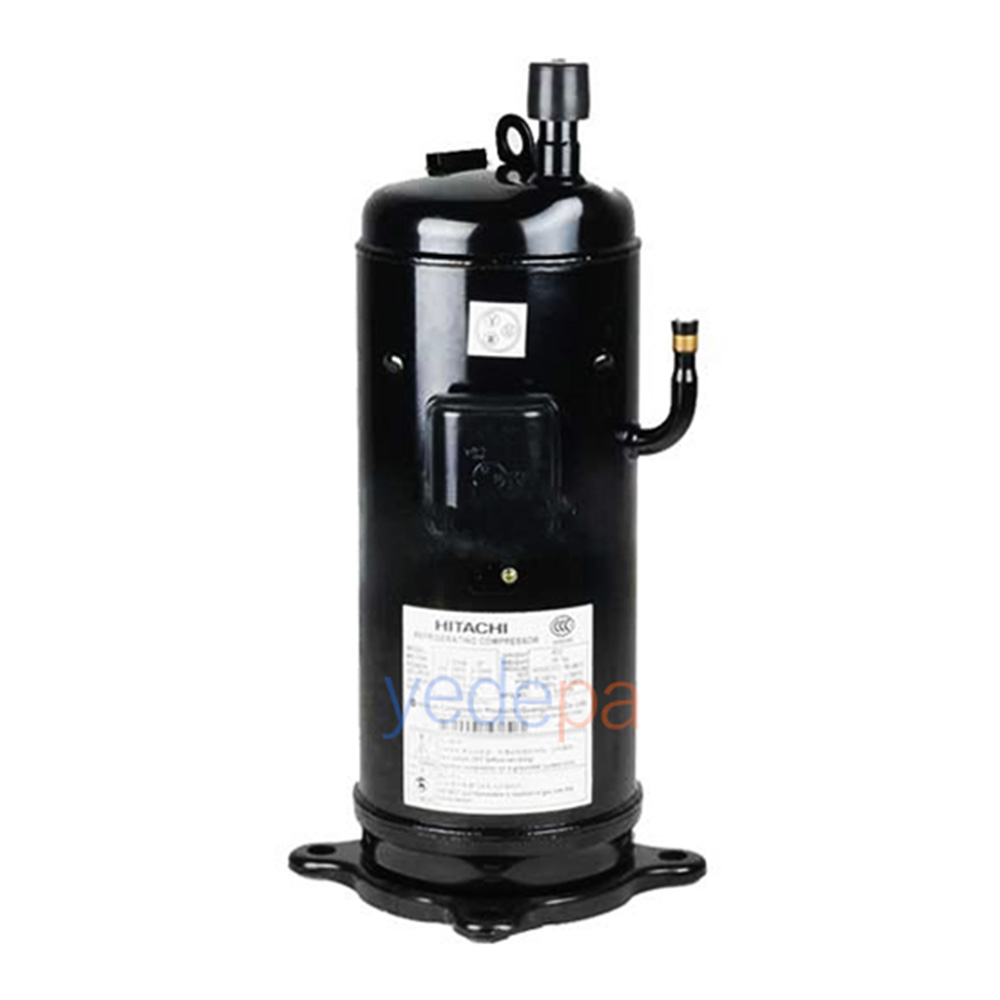
- Scroll Compressor: Compresses the refrigerant between two spiral disks. Offers high efficiency, low vibration and quiet operation. It is standard in systems above 18,000 BTU. Hitachi E656DHD-65D2Y and Mitsubishi AGT201A827HD are representatives of this class.
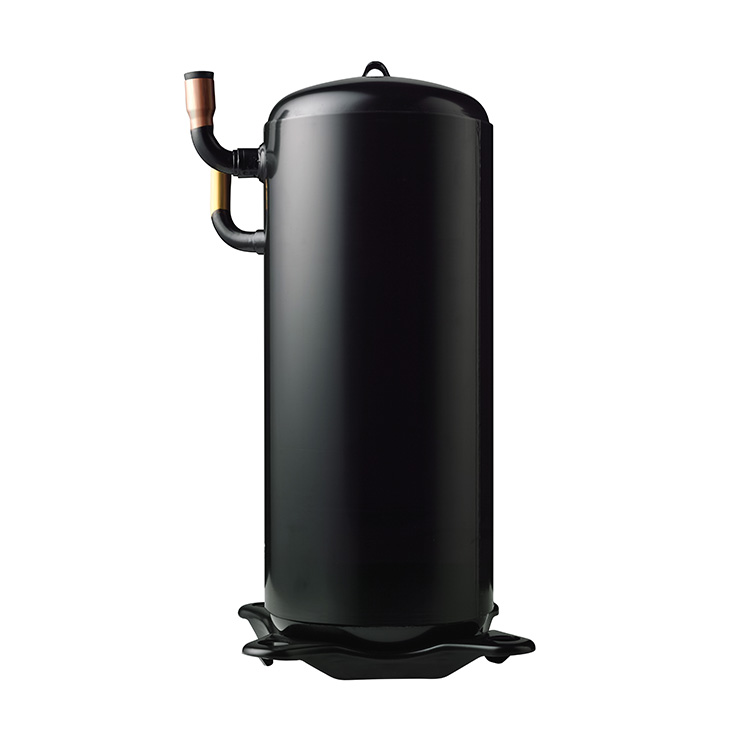
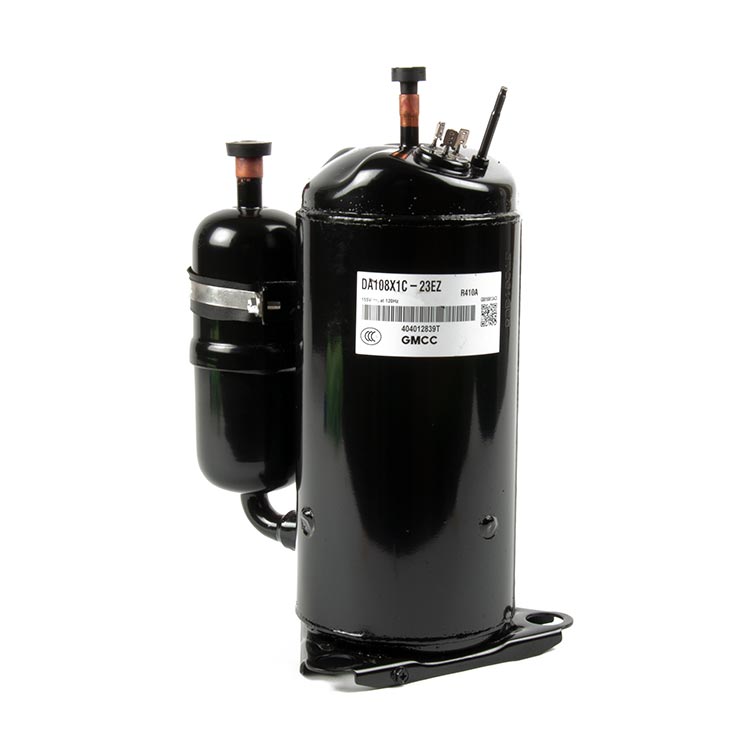
- Rotary Compressor: Compresses by rotating an eccentric rotor inside a cylinder. Provides a compact structure, low cost and fast response. Common in 9,000-36,000 BTU split air conditioners. Panasonic C-9RVN393HoV and Mitsubishi NN40VAAMT are examples of this class.
- Reciprocating (Piston) Compressor: Works with a crank-piston mechanism; today it has largely given way to scroll and rotary types in air conditioning applications and is used more in refrigeration.
In the Yedepa.com catalog, you can find both inverter and standard variants of all three types. What makes a model "inverter" is the compatible operation of the manufacturing technology (especially the DC brushless motor and precise lubrication) with the driver board in the outdoor unit.
Inverter Air Conditioner Compressor Model Types
There are three main inverter families on the market: DC Inverter Scroll, DC Inverter Rotary and Twin Rotary Inverter. As capacity increases, scroll models come to the fore; in low-tonnage residential air conditioners, rotary inverters dominate.
| Model | Type | Refrigerant | Typical Capacity |
|---|---|---|---|
| Hitachi E656DHD-65D2Y | DC Inverter Scroll | R410A | ~65,000 BTU |
| Hitachi E405DHD-36D2YG | DC Inverter Scroll | R410A | ~36,000 BTU |
| Mitsubishi GTC5150NH48L | Inverter Scroll | R410A | ~48,000 BTU |
| Mitsubishi Heavy AGT201B827HD | Inverter Scroll (Japan) | R410A | ~22,500 BTU (6.5 kW) |
| Panasonic C-9RVN393HoV | DC Inverter Rotary | R410A | ~65,267 BTU |
| Daikin JT125L-P8Y1 | Scroll (standard) | R410A | ~45,650 BTU |
| Mitsubishi NN40VAAMT | Rotary (standard) | R410A | ~36,000 BTU |
| Panasonic KHSL25A15AA | Rotary (standard) | R410A | ~24,000 BTU |
Since the Yedepa.com stock inventory covers both inverter and fixed-speed compressors, the chance of finding the correct equivalent for the type of air conditioner the technician is working on is high. In the Inverter vs Standard Air Conditioner Compressor Comparison, the first point to pay attention to is whether the outdoor unit board of the air conditioner contains an inverter driver; otherwise, the system will not work even if an inverter compressor is installed.
Which Model Should You Choose for Which Situation?
The correct compressor selection depends on the customer's usage profile and the existing system. The following scenarios have been compiled from field experience:
- Residential 9,000–18,000 BTU split air conditioners (continuous use): Prefer an inverter rotary. Panasonic KHSL15A15AA or equivalent DC inverter rotary models significantly reduce the electricity bill in the long term.
- VRF / Multi-split systems (above 24,000 BTU): DC inverter scroll is mandatory. Hitachi E656DHD-65D2Y and Mitsubishi GTC5150NH48L and similar large scroll models can supply multiple indoor units from the outdoor unit at independent speeds.
- Semi-commercial spaces such as shops and restaurants: If the system is a classic on/off packaged air conditioner, a standard scroll (for example the Daikin JT125L-P8Y1) is the safest equivalent; there is no need to replace the driver board.
- Industrial process cooling / chiller: Since it generally runs at constant load, a standard scroll is sufficient; inverter only makes sense in projects requiring partial load modulation.
- Regions with weak power grids: At points with high voltage fluctuation, a standard compressor + a good starter may prove more durable; inverter drivers fail at low voltage.
Air Conditioner Compressors Available at Yedepa.com
Below are the featured inverter and standard class models from Yedepa.com's current stock. All products are original; pricing is updated according to free market conditions.
- Hitachi E656DHD-65D2Y DC Inverter Scroll Compressor — Reference model for large-tonnage VRF and commercial air conditioners. High segment with prices starting from approximately 2,446 USD.
- Mitsubishi Inverter Scroll Compressor GTC5150NH48L (AGT201A827HD) — Balanced choice for medium-to-large capacity applications, in the 2,042 USD range.
- Mitsubishi Heavy AGT201B827HD Scroll Compressor — Made in Japan, 6.5 kW R410A inverter; a favorite of service technicians thanks to its long life.
- Hitachi E405DHD-36D2YG DC Inverter Scroll R410A — Optimized for 36,000 BTU class VRF outdoor units.
- Panasonic C-9RVN393HoV DC Inverter Rotary Compressor — 65,267 BTU, 380-415V three-phase, a powerful rotary alternative for commercial air conditioners.
- Mitsubishi NN40VAAMT Rotary Air Conditioner Compressor (36,000 BTU) — The classic choice in standard on/off applications, affordable at under 425 USD.
- Daikin JT125L-P8Y1 Scroll Air Conditioner Compressor (45,650 BTU) — Common equivalent in commercial packaged air conditioners, fast supply.
- Panasonic Rotary Air Conditioner Compressor KHSL25A15AA / KHSL15A15AA / 5VS295EAA21 — Three different capacity options in the 9,000–24,000 BTU range for residential and small commercial systems.
Yedepa.com shares the fitment code, OEM number and compatible brand information for each product on its page. This way, the technician finds the answer to the question "which unit does this compressor fit?" within seconds.
Selection Criteria and Professional Tips
When selecting a compressor, capacity (BTU/kW) alone is not enough. Professional services check the following criteria in order:
- Refrigerant compatibility: R410A, R32, R407C and R22 use different oil types. The wrong refrigerant burns out the compressor in the first week.
- Voltage and phase: 220V single-phase and 380V three-phase models look physically similar, but the motor winding is completely different. The label information must be compared.
- Oil type: Inverter compressors generally use POE oil; standard models may use mineral oil or POE. If moisture remains in the circuit, POE oil hydrolyzes.
- Connection copper pipe diameter: Suction and discharge lines should be measured before brazing; the pipe diameter difference is often overlooked, especially in scroll-to-rotary conversions.
- Driver board compatibility: An inverter compressor only works with a driver suited to the manufacturer's frequency range. A Hitachi inverter compressor cannot be fitted directly to a Mitsubishi driver.
- Oil level and charge: When replacing a compressor, the system should be pressure tested with nitrogen and evacuated to below 500 microns.
A common mistake in field experience is fitting a standard compressor to an inverter system "because it was cheap". The driver board sends an incompatible frequency and the new compressor blows the fuse within a few hours. Yedepa.com's technical support line provides model-based cross-checking to detect such incompatibilities before sale.
Energy Consumption and Payback Period
A simple calculation can be made to understand the economic advantage of inverter technology. If a standard 18,000 BTU air conditioner draws an average of 1,200 kWh per year, an inverter air conditioner of the same capacity consumes approximately 800 kWh. Depending on the unit electricity price, this results in annual savings of 31–53 USD. The payback of the additional investment in compressor cost through this difference is between 2–4 years depending on the intensity of use.
In commercial spaces (hotels, offices, shops), since the air conditioner runs 12+ hours a day, the payback period drops below 1 year. That is why in the commercial segment the Inverter vs Standard Air Conditioner Compressor Comparison almost always comes out in favor of inverter.
Maintenance and Usage Recommendations
The basic maintenance rules for extending the life of both inverter and standard compressors are similar, but inverter models require some additional care:
- Filter cleaning: A clogged evaporator filter causes the compressor to run constantly at high frequency; an "overcurrent" alarm appears on the inverter driver.
- Outdoor unit condenser: It should be cleaned with high-pressure water at least 2 times a year (without spraying the motor). A dirty condenser raises the discharge pressure and trips the compressor's safety thermal protection.
- Gas charge: In inverter systems, overcharging/undercharging burns out the driver board within a short time. Always charge by the gram while measuring with a manifold.
- Electrical protection: A regulator or at least an AVR is strongly recommended for inverter air conditioner outdoor units.
- Fan motor health: The outdoor unit fan motor is as critical as the compressor; equivalents such as the Arçelik-Beko Outdoor Unit Air Conditioner Fan Motor 7000-9000 BTU 5400087825 prevent the compressor from overheating in case of fan failure.
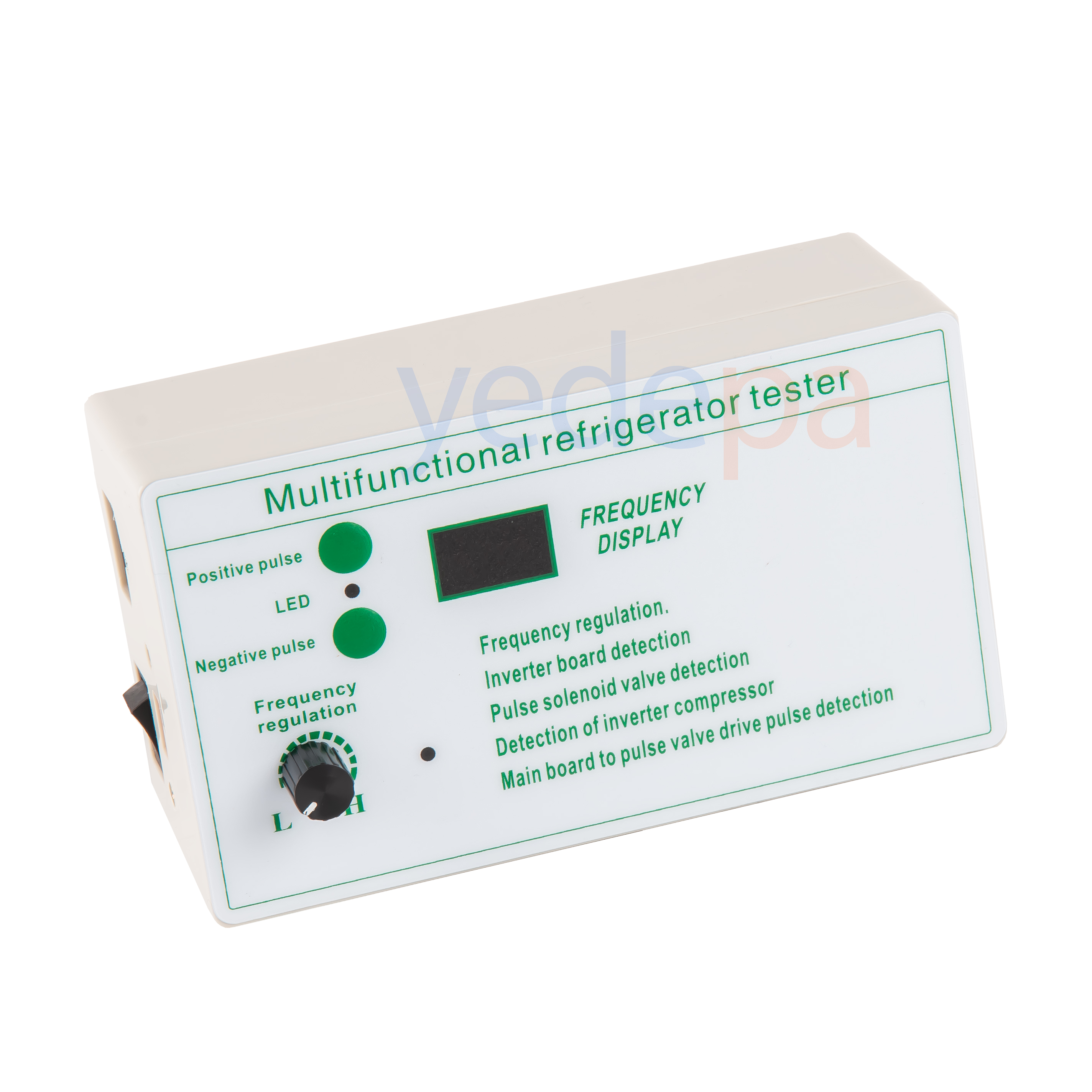
- Test and diagnostic equipment: Service technicians must have tools such as the Air Conditioner Fan Motor Tester 3-Wire and 5-Wire (310V) Universal DC Driver Detector; whether the fault is in the compressor or the motor should be determined in advance.
Frequently Asked Questions (FAQ)
1. Can an inverter air conditioner compressor be fitted to a standard system?
No. An inverter compressor only works correctly when connected to the manufacturer's variable frequency driver board. When fitted to a standard on/off system, the windings are damaged.
2. Does a scroll compressor or a rotary compressor last longer?
In general, scroll models last longer because the number of friction parts is lower and vibration is low. However, in systems below 18,000 BTU, rotary is more economical.
3. Can R22 gas be charged into an inverter compressor using R410A gas?
Never. Due to oil incompatibility and pressure difference, the compressor fails within a few hours. The refrigerant must be the same as the value specified on the compressor label.
4. How much electricity does an inverter compressor save?
It typically provides annual savings of 30–50%. In continuously running commercial systems, the payback period can drop below 12 months.
5. Which parts must be renewed when replacing a compressor?
The drier, compressor oil, brazing points and, if necessary, the 4-way valve o-rings should be renewed. In inverter models, the firmware version of the driver board is also checked.
6. Are the Mitsubishi Heavy AGT201B827HD and the Mitsubishi Electric AGT201A827HD the same?
No. Mitsubishi Heavy Industries and Mitsubishi Electric are separate companies; even if the codes are similar, the oil and connection standards may differ. Check the fitment list on the Yedepa.com page.
7. How many microns should the vacuum be after replacing an air conditioner compressor?
In R410A systems, it is recommended to evacuate below 500 microns and hold it steady for at least 20 minutes. Otherwise, the moisture remaining in the system degrades the POE oil.
8. Are compressors purchased from Yedepa.com covered by warranty?
Yes. All original branded compressors sold at Yedepa.com are covered by the manufacturer's warranty; in addition, technician- and service-focused after-sales support is provided.
Conclusion and Yedepa.com Advantages
Inverter vs Standard Air Conditioner Compressor Comparison: the clear result is this: If continuous use, precise comfort and long-term savings are your priority, inverter compressors are indisputably superior. However, if the electrical infrastructure is weak, the usage time is short or the existing system works on on/off logic, standard compressors still continue to be an economical and robust solution.
The advantages we offer the HVAC sector as Yedepa.com are as follows:
- Wide stock: Both inverter and standard compressors from major brands such as Hitachi, Mitsubishi, Mitsubishi Heavy, Daikin, Panasonic and Arçelik under one roof.
- OEM and equivalent fitment information: Each product page includes a compatible device list, model code matching and technical label information.
- Technician- and service-focused support: Technical question support via phone and WhatsApp; cross-checking that prevents the sale of incompatible models.
- Test equipment integration: Alongside the compressor, fan motor testers, outdoor unit fan motors, driers and electronic board equivalents are supplied in the same cart.
- Transparent pricing: A wide budget range from outdoor unit fan motors in the 27 USD range to large scroll inverter compressors above 2,446 USD.
- Knowledge-based content: Thanks to technical guides like this one, you make product selection decisions based on "data", not "guesswork".
The right compressor selection determines whether the air conditioner runs trouble-free for 10+ years or breaks down again within 1 year. By combining field experience with manufacturer data, it is possible to improve both the end user's electricity bill and the service's warranty return rate. Yedepa.com provides you with both the product and the technical infrastructure to make this decision correctly.
🛒 Inverter Compressors at Yedepa.com — Featured Products
The most preferred professional products, selected from our stock. Browse and order now.