
Contactor Types for Industrial Refrigeration and Air Conditioning Systems
Contactors, which safely switch in and out the main high-current components of air conditioning and refrigeration systems such as compressors, fan motors and heating elements, are the electrical heart of the system. These electromechanical switches open and close the main power circuit with the low-level control signals coming from the main board or thermostat, protecting your equipment against overloads and electrical fluctuations and delivering long-lasting, stable operation.
Safe Electrical Switching and High Durability
Quality contactors, designed to handle without trouble the high currents drawn in refrigeration systems, especially by compressors at the moment of start-up (inrush), minimise electrical risks such as contact welding and arcing. Our wide product range, offered with different ampere ratings and coil voltages and suitable for single-phase (1P, 2P) and three-phase (3P, 4P) mains connections, provides a solution for all your industrial needs, from split air conditioners to VRF systems and from cold storage rooms to chiller units.
Key Criteria to Consider When Choosing a Contactor
To choose the right contactor when designing a control panel or replacing a faulty part, the following electrical values must match your system exactly:
- Coil Voltage: 24V, 220V (230V) or 380V (400V) AC/DC coil options to suit the trigger voltage coming from the main board.
- Current Carrying Capacity (Amperes): Capacity options of 9A, 12A, 18A, 25A, 32A, 40A and above to suit the rated current of the compressor or motor.
- Number of Poles (P): 1, 2, 3 or 4-pole main contact configurations according to the power supply of the equipment.
- Auxiliary Contacts: Normally open (NO) and normally closed (NC) auxiliary contact blocks for automation systems and fault signalling.
- Area of Use: Air conditioner outdoor units, cold room control panels, industrial refrigeration equipment and HVAC automation systems.
Practical Note for Technicians in the Field
Technician's Note: When repairing a system in which the compressor contactor has welded or the coil has burnt out, replacing the contactor alone may not be a permanent solution. Before replacement, always measure the compressor's start capacitor. A weakened capacitor causes the compressor to draw high current for a long time and will quickly burn the contacts of the newly fitted contactor as well. Also make sure you tighten the cable lugs on the terminal connections very well; loose connections arc, leading to heating and oxidation.
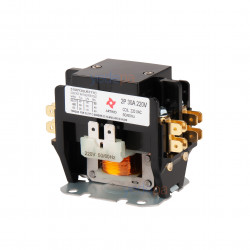
-250x250.jpg "3100Y20U6777C 2-Pole (2P) 30A 220V AC Contactor")
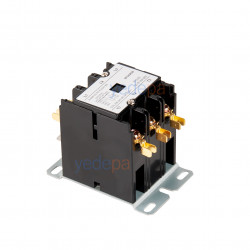
-250x250.jpg "RF04W38 3-Pole 30A 220V AC Contactor (Definite Purpose Contactor)")