What Are Chemicals? Applications in HVAC and Refrigeration Systems
Service chemicals for HVAC and refrigeration systems are among the most critical consumables that should be in a modern technician's toolbox. At every stage, from a split air conditioner installation to the maintenance of an industrial cold store, it is almost impossible to do quality work without leak detection dyes, leak stop sealants, condenser cleaners, leak detection fluids and cooling performance enhancing additives. The chemicals category serves a wide range of tasks, from maintaining the leak tightness of the refrigerant circuit to restoring the efficiency of the condenser coil.
At Yedepa.com, we have brought together leading brands of the industry such as Elke, Nevada, OEM and Alcold under one roof for household appliance service companies, air conditioning technicians, commercial refrigeration technicians and industrial HVAC engineers serving throughout Turkey. On this page you will find all the details, from which chemical to use for which fault to the technical specifications of the products.
Technical Details and Operating Principle of Service Chemicals
We can evaluate the chemicals used in refrigeration systems in three basic categories. The first group is leak detection products. Fluorescent dyes that glow under UV light or foam-forming detection fluids reveal invisible micro leaks within minutes. The second group is sealing (leak stop) products. As these chemicals circulate in the circuit, they react only at the small holes where the leak is and seal that point permanently. The third group is cleaning and performance enhancing products; in particular, products that maintain the heat transfer efficiency of condenser and evaporator coils.
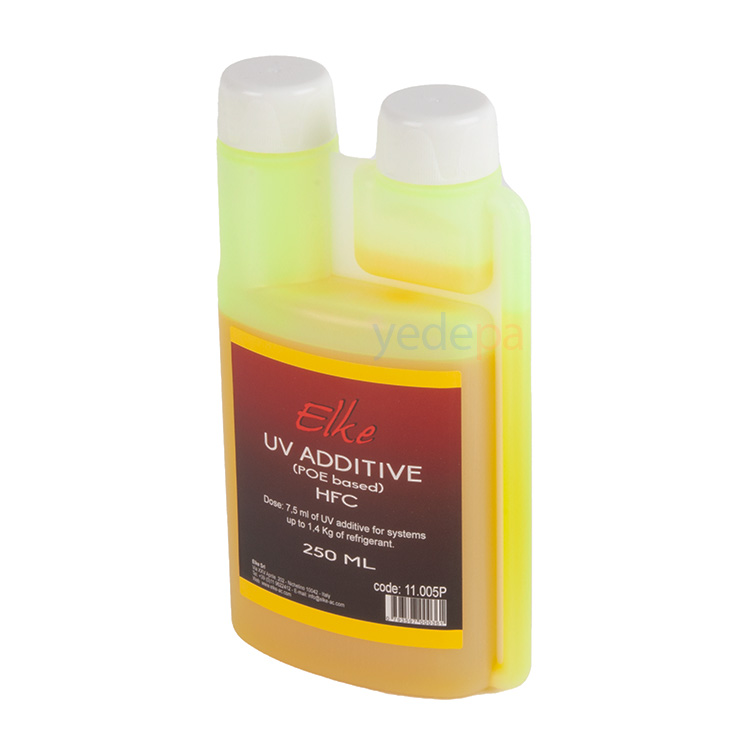
Modern HVAC chemicals are formulated to be compatible with different refrigerants such as R134a, R410A, R32, R290 and R1234yf. Thanks to formulations that do not form deposits when mixed with polyolester (POE) and polyalkylene glycol (PAG) oil types and do not affect compressor performance, they do not put system safety at risk. Professional products such as the Elke 11.005P Refrigerant System Leak Detection Dye are among the best examples of this multiple compatibility.
Types and Categories of HVAC Chemicals
We group the chemical products we offer at Yedepa.com according to their intended use as follows:
- UV Leak Detection Dyes: Glow bright green or yellow under 254-395 nm UV light, clearly showing the location of micro leaks.
- Leak Stop (Sealant) Chemicals: While circulating in the system, they polymerize at the point where they come into contact with moisture or air, sealing the hole.
- Condenser and Evaporator Cleaners: Foaming or liquid formulas that dissolve dust, oil and oxide deposits and improve heat transfer.
- Leak Detection Fluids: When applied to connection points, they form bubbles, enabling visible leak diagnosis.
- Cooling Performance Enhancing Additives: Reduce energy consumption by improving the lubricating properties of the compressor oil.
- Epoxy Repair Putties: Quickly repair cracks on copper tubes, aluminum coils and metal surfaces.
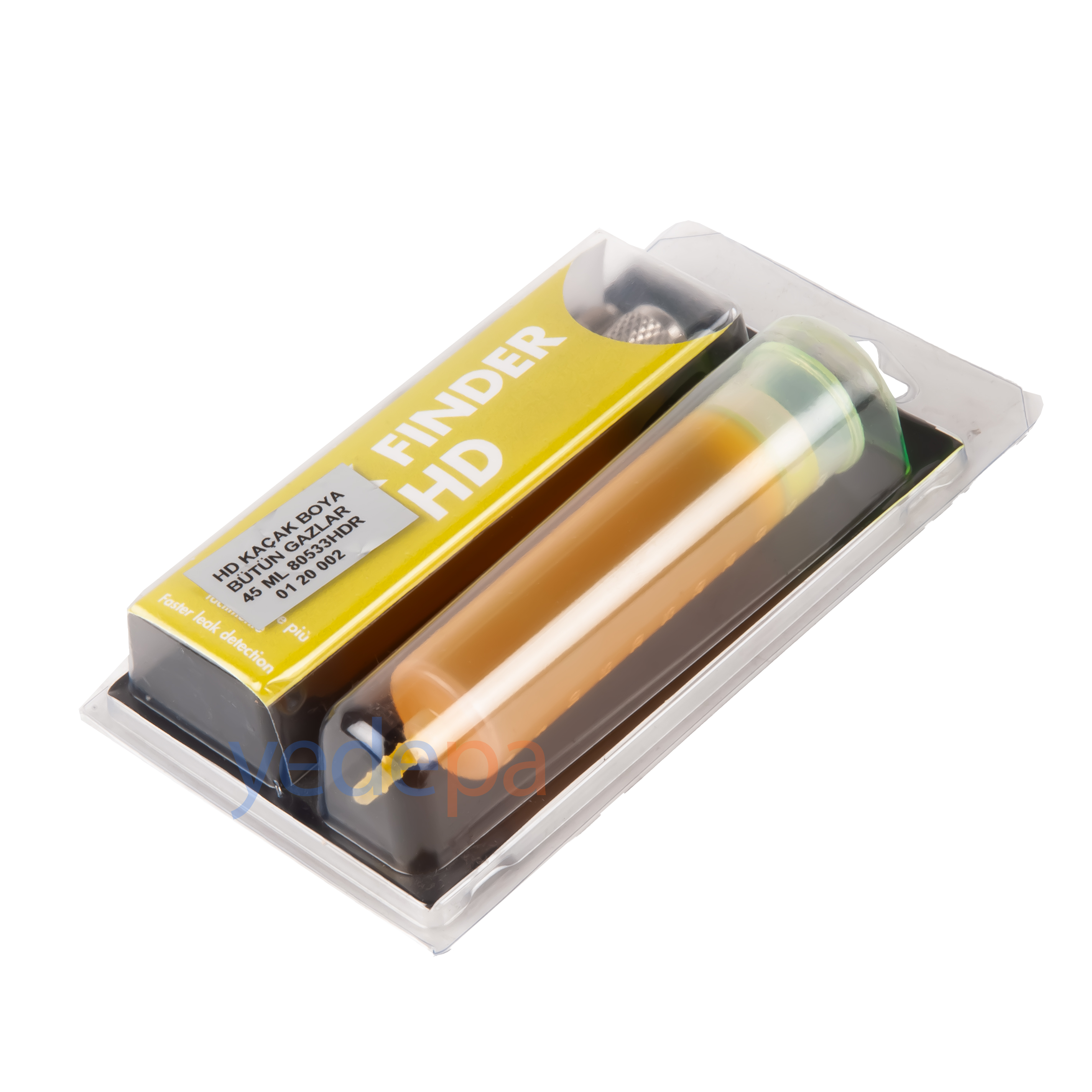
Each type has its own application method. For example, the Leak Finder HD UV Leak Detection Dye 45ML syringe for HVAC Refrigeration Systems is injected directly into the service valve, while Alcold Condenser Cleaner is applied as a spray or as a diluted solution with a brush.
Which Chemical Should You Choose? Decision Guide
Choosing the right chemical directly affects the success of the application. The table below will make your decision-making process easier:
| Fault / Need | Recommended Product Type | Application Method |
|---|---|---|
| Invisible micro refrigerant leak | UV Leak Detection Dye | Injection through service valve + UV lamp |
| Suspected visible leak at a connection point | Leak Detection Fluid | Apply to connection + observe bubbles |
| Recurring refrigerant loss (micro hole) | Leak Stop Chemical | Injection while the system is running |
| Drop in cooling efficiency (dirty condenser) | Condenser Cleaner | Spray or foam application |
| Improving lubrication and efficiency | Performance Enhancing Additive | Injection into the circuit with a syringe |
| Copper tube or coil crack | Epoxy Repair Putty | Kneaded and applied to the surface |
If you are looking for a professional dose-adjustable gun for fast detection in the field, the Mariel - Nevada Revo Pro Dose-Adjustable Gun is the most practical solution. Thanks to its easy one-handed use and precise dose adjustment, it minimizes fluid waste.
Chemicals Available at Yedepa.com
At Yedepa.com, our chemicals category includes the following products preferred by professional technicians:
- Elke 11.190 Refrigeration System Leak Stop Sealant 60 ml — A professional sealing solution that seals micro leaks while the system is running.
- Elke 11.005P Refrigerant System Leak Detection Dye R134-R410-R32 250 ML — A multi-refrigerant compatible, economically sized UV leak detection dye.
- Mariel - Nevada Revo Pro Dose-Adjustable Gun — A professional application gun for leak detection fluid.
- Mariel - Nevada Revo Pro Leak Detection Fluid Hose and Adapter — An application accessory used with the gun.
- HVAC Leak Finder HD UV Leak Detection Dye 45ML Syringe (80533HDR) — A practical syringe format for fast injection in the field.
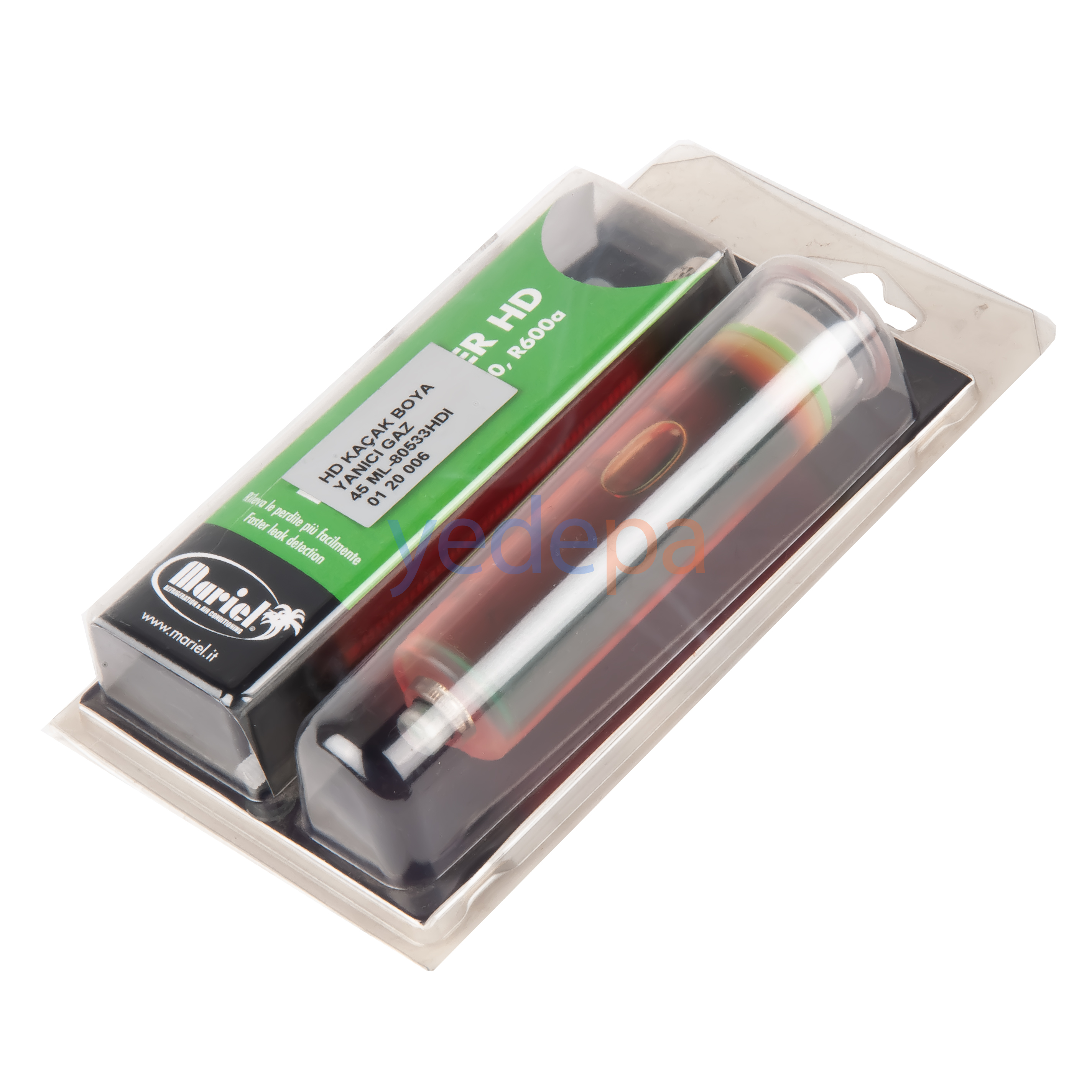
- HVAC Leak Finder HDiR UV Leak Detection Dye 45ML Syringe (80533HDiR) — High-concentration dye formula, suitable for deep leaks.
- HVAC Leak Finder Multigas UV Leak Detection Dye 45ML Syringe (80532R) — A universal formula compatible with all refrigerants.
- HVAC Supercold Cooling Performance Enhancer 45ML Syringe (80542R) — Increases system efficiency and lubrication quality.
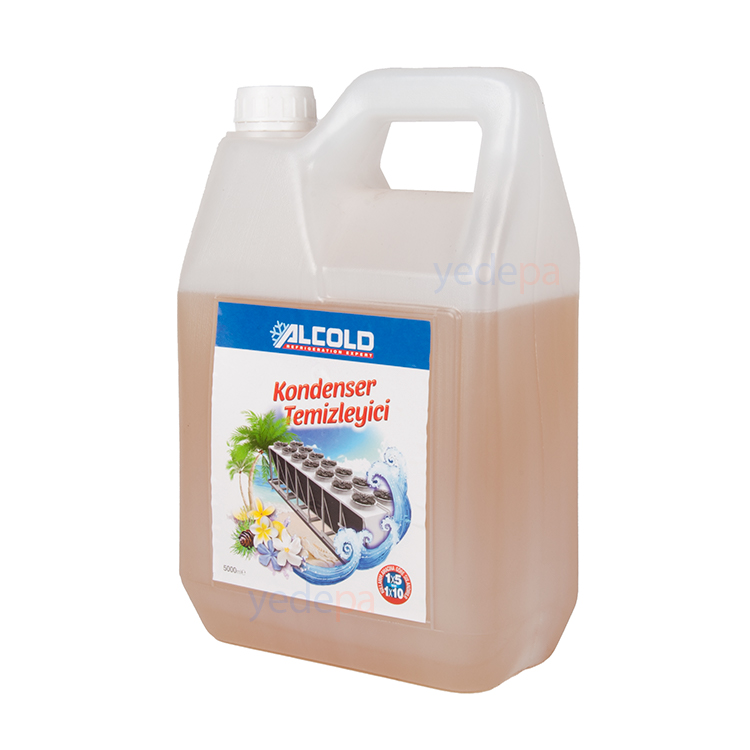
- Alcold Condenser Cleaner 5 Lt — An industrial-size, concentrated product for cleaning outdoor unit and VRF condensers.
- LA-CO Heat Seal Stik® Epoxy Leak Repair Putty (11.7 g) — A high-temperature-resistant epoxy providing instant repair.
All these products are shipped from our warehouse in their original packaging with checked expiry dates.
Professional Selection Criteria
There are several critical parameters that professionals should pay attention to when buying HVAC chemicals:
- Refrigerant compatibility: Always check which refrigerants the product is compatible with, such as R134a, R410A, R32 and R1234yf. An incompatible dye can react with the compressor oil and clog the system.
- Oil type compatibility: Chemicals not declared compatible with POE, PAG and mineral oils can form deposits in the long term.
- UV wavelength: The wavelength of the UV lamp you use (usually 365-395 nm) must match the properties of the dye.
- Dose amount: Overdosing in relation to the system volume is not beneficial; on the contrary, it is harmful. Follow the manufacturer's instructions.
- Shelf life: Opened chemical bottles can lose their properties when exposed to moisture. The packaging quality of brands such as Elke and Nevada provides a great advantage in this respect.
- Certification: Chemicals complying with European standards (EN, REACH) are important both for safety and for legal liability.
Usage Scenarios and Field Applications
Field use of HVAC chemicals is a subject that requires experience. If you observe a drop in performance in a VRF system you maintain annually, we recommend first cleaning the outdoor unit coil with Alcold Condenser Cleaner 5 Lt. This process usually provides an efficiency increase of 15-25%. If the problem is not solved by cleaning, inject a UV leak detection dye, run the system for 24-48 hours and scan the connection points with a UV lamp.
The situation of "a small refrigerant top-up at the start of every season", frequently encountered in split air conditioner service, almost always indicates a micro leak. In such cases, applying Elke 11.190 Leak Stop both offers the customer a permanent solution and reduces repeat service calls. In commercial refrigeration equipment, epoxy putties (LA-CO Heat Seal Stik®) are indispensable for immediate intervention.
Usage and Maintenance Recommendations
Paying attention to the following points when using chemicals guarantees both your own safety and the long life of the customer's system:
- Use nitrile gloves and safety goggles before every application; epoxy putties in particular can be irritating on skin contact.
- If you are working in an enclosed area, always ensure ventilation. Aerosol chemicals can affect the respiratory tract at high concentrations.
- Make sure the system is under vacuum before dye injection; injection without vacuum upsets the dose balance.
- Store unused chemicals in their original cap at 5-25°C. Freezing and excessive heat shorten product life.
- Do not dispose of waste chemicals in the environment; hand them over to authorized waste collection centers.
- Always rinse thoroughly with water after using condenser cleaner; otherwise residue may remain on the coil surface.
Frequently Asked Questions (FAQ)
Q1: Does UV leak detection dye damage the compressor?
No. Professional formulas (Elke, Nevada) are fully compatible with compressor oil when used at the correct dose. The important thing is not to exceed the dose limit per system volume recommended by the manufacturer.
Q2: Does using a leak stop (sealant) affect the warranty?
Some air conditioner manufacturers state that you may lose warranty coverage after using a sealant. Check the manufacturer's documentation before using it on new units; there is no problem with old or out-of-warranty systems.
Q3: How often should condenser cleaner be applied?
Once a year is recommended for residential split systems and 2-4 times a year for commercial and industrial systems. More frequent application may be necessary in dusty environments (coastal, industrial areas).
Q4: Which UV lamp should be used with leak detection dye?
A UV lamp with a wavelength of 365-395 nm and a power of at least 5W gives the most accurate result. Lower-power lamps cannot detect small leaks.
Q5: Are the chemicals sold at Yedepa.com genuine?
Yes. All Elke, Nevada, OEM and Alcold products are supplied through official distributors or directly from the manufacturer. Delivery is made with an invoice and warranty.
Q6: Up to what temperature does epoxy repair putty withstand?
Professional epoxies such as LA-CO Heat Seal Stik® work between -50°C and +200°C, which is sufficient for both cooling and heating applications.
Q7: Can more than one chemical be applied at the same time?
This is generally not recommended. Apply in the order of leak detection first, then leak stop and finally the performance enhancing additive; leave an observation period of at least a few hours between each application.
Conclusion and Yedepa Advantages
HVAC and refrigeration system chemicals, when the right product is used at the right time, are critical aids that both make the technician's work easier and increase customer satisfaction. A wrongly chosen or poor-quality chemical can cause damage in the system that is difficult to reverse; therefore, brand reliability and transparency of the supply channel should be your priority.
At Yedepa.com, we offer the wide chemical portfolio of industry leaders such as Elke, Nevada, OEM and Alcold to professional service companies with invoiced, VAT-included prices. Special pricing, fast supply and technical support services are available for our B2B customers. When you cannot decide which chemical is suitable for a particular situation in your refrigeration system, our customer service team or our technical staff with 25+ years of experience in the industry will be happy to help you.
To review all our products in the HVAC chemicals category, compare prices and add them to your cart, you can visit our category page; for your questions, you can contact us through Yedepa.com. Going out into the field with the right chemical alongside the professional technician saves both time and money.
🛒 HVAC Chemicals at Yedepa.com — Featured Products
The most preferred professional products, selected from our stock. View and order now.
.jpg)
.jpg)