💱 Price Note: The prices stated on this page are USD-based reference values. For the current TRY equivalent and stock status, we recommend visiting the product page. On Yedepa.com, prices are calculated using the daily exchange rate.
What Are Gas Leak Detectors? Why Are They Indispensable?
Gas leak detectors are sensitive electronic instruments designed to detect leaks that may occur in HVAC systems, refrigeration circuits, combi boilers and natural gas lines at an early stage. Micron-level leaks that a technician cannot see or hear reduce system efficiency, cause refrigerant loss, pave the way for compressor failures and, in the worst case, turn into life-threatening incidents such as fire or poisoning. This is exactly where professional gas leak detection instruments come into play.
At Yedepa.com we have brought together under one roof gas leak detector models that appeal to a wide range of users, from air conditioner service technicians to refrigerator repairers, and from natural gas installers to industrial refrigeration technicians. In this guide we share with you all the technical details, model differences and practical field knowledge you need to choose the right instrument.
Working Principle and Technical Details
Gas leak detectors continuously draw in ambient air and measure the presence of certain molecules. The type of sensor at the heart of the instrument directly determines its sensitivity and response time. Three main sensor technologies stand out in professional models:
- Heated diode sensor: Considered the most sensitive technology. It finds HFC and HFO refrigerants such as R410A, R32, R134a, R404A and R407C with high accuracy. The LD-100+ HVAC Refrigerant Leak Detector is a strong representative of this class.
- Corona discharge sensor: Ionizes gas molecules by generating high voltage. Suitable for general-purpose scanning.
- Semiconductor sensor: Detects flammable gases such as LPG, methane, propane and acetylene. The HABOTEST HT58PRO and Smart Sensor AS8800L are the leading products in this category.
- Electrochemical sensor: Used for carbon monoxide (CO) measurement. The Smart Sensor ST9700 is a portable CO detector working with this technology.
The choice of sensor varies according to the intended use. For an air conditioner technician a heated diode specific to refrigerants is essential; for a natural gas installer a flammable gas detector is more suitable.
Types and Models
The gas leak detectors available on the market can be examined under four main headings according to their field of use:
- Refrigerant leak detectors: Detect refrigerant leaks in air conditioner, chiller, cold room and refrigerator systems. A flexible probe, audible and visual alarm and sensitivity adjustment are standard features.
- Combustible gas detectors: Measure flammable gases such as methane, propane, butane, LPG, acetylene and hydrogen. Used in installation checks and natural gas line maintenance.
- Carbon monoxide detectors: Measure the CO level in the flues and boiler rooms of combustion appliances such as combi boilers, water heaters and stoves. Critical for life safety.
- Multi-gas detectors: Professional equipment that scans more than one gas type with a single instrument; generally preferred for industrial field use.
Which Model to Choose? Decision Guide
Choosing the right gas leak detector depends on the type of work you will do and how often you will use it. We recommend reviewing the decision matrix below:
| Usage Scenario | Recommended Sensor | Example Model |
|---|---|---|
| Air conditioner/VRF leak detection (intensive field use) | Heated diode | Rothenberger Ro-Leak, LD-100+ |
| Refrigerator/small refrigeration service | Corona / Diode | HLD-200, WJL-6000 |
| Natural gas installation check | Semiconductor | HABOTEST HT58PRO, AS8800L |
| Combi boiler maintenance and flue measurement | Electrochemical CO | Smart Sensor ST9700 |
| Industrial cold room | High-sensitivity diode | Rothenberger 1500002241 |
If you carry out a large number of air conditioner maintenance jobs every week, the professional-class Rothenberger 1500002241 Ro-Leak Gas Leak Detection Set will be the most economical choice in the long run. For technicians who go out to fault calls occasionally, instruments such as the HLD-200 or WJL-6000 offer cost-effective solutions.
Gas Leak Detectors Available on Yedepa.com
The Yedepa.com catalog offers a wide range of models at both professional class and service tool level. Featured models in our stock:
- Rothenberger 1500002241 Ro-Leak Gas Leak Detection Set (Sensor + Charger): A complete set with case and heated diode sensor, manufactured with German engineering. The reference instrument for professional field use. Price: 316 USD.
- LD-100+ HVAC Refrigerant Leak Detector: Sensitive diode sensor, support for multiple refrigerants, three-level sensitivity adjustment. Price: 131 USD.
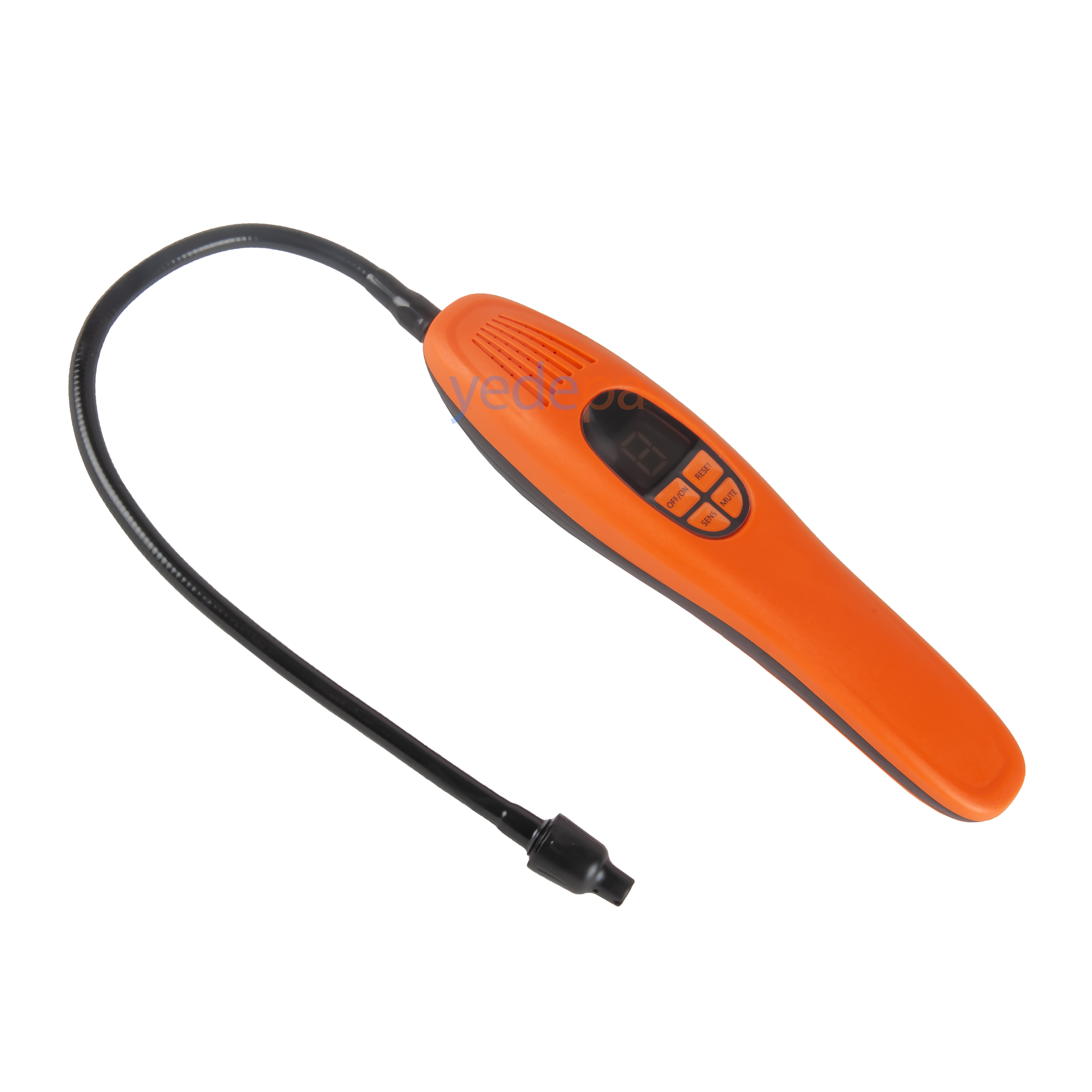
- HLD-200 HVAC Refrigerant Leak Detector: Flexible probe, audible/visual warning, compact design. Ideal for service technicians. Price: 66 USD.
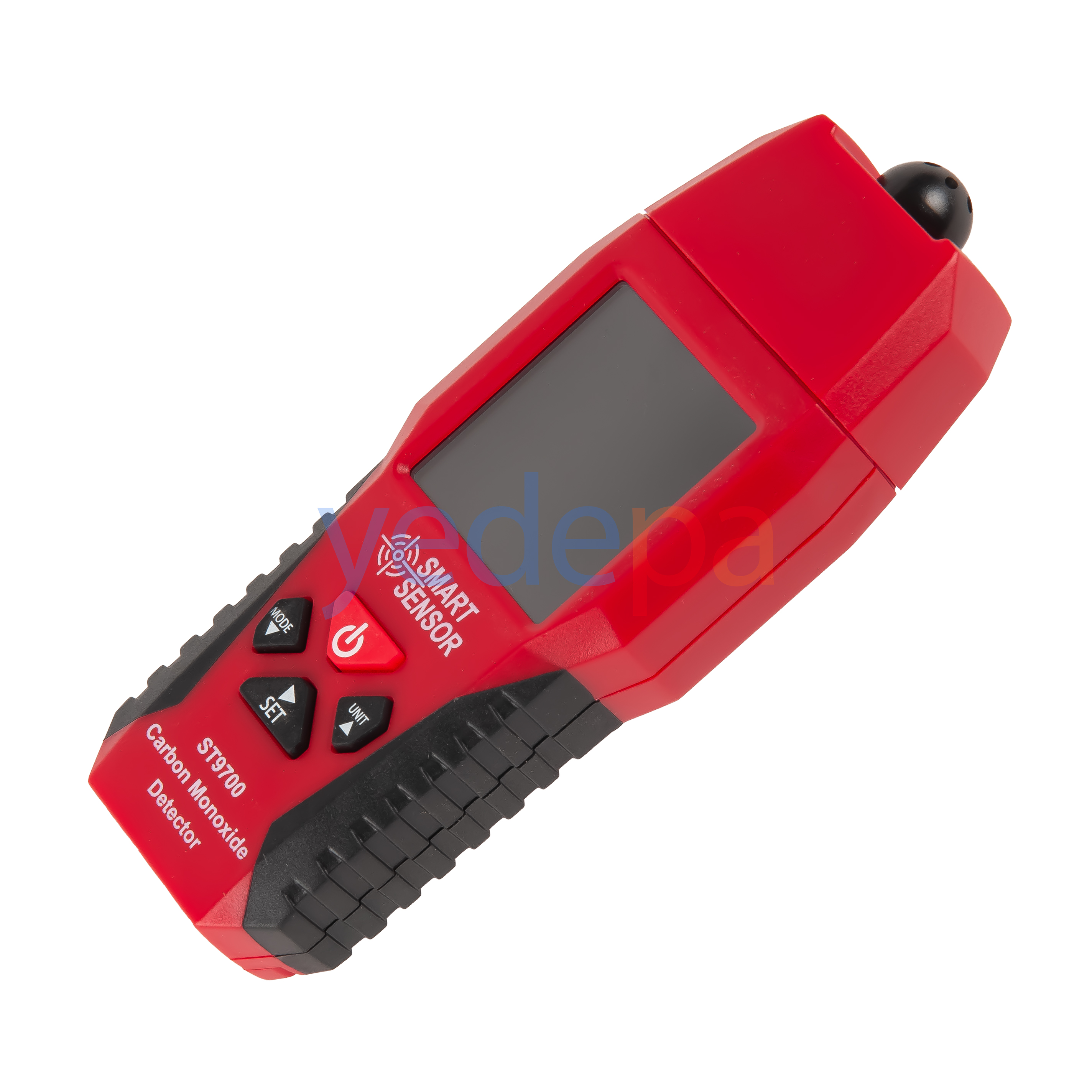
- Smart Sensor ST9700 Portable Carbon Monoxide Detector: 0-1000 PPM CO measuring range, audible and visual alarm, with temperature display. Price: 54 USD.
- HABOTEST HT58PRO Gas Leak Detector: A rapid detection instrument for methane, LPG, propane, acetylene and other flammable gases. Price: 54 USD.
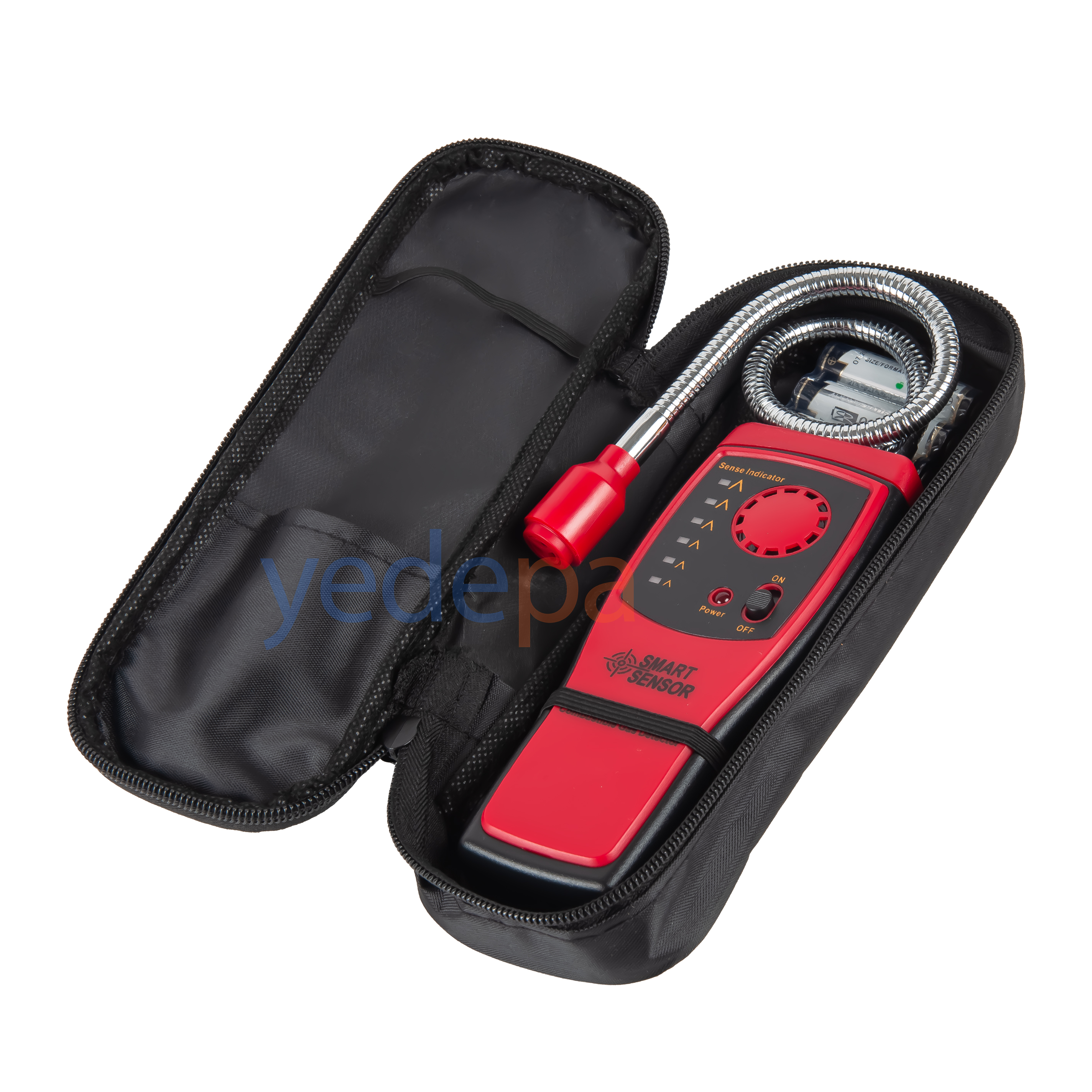
- Smart Sensor AS8800L Portable Combustible Gas Detector: An economical solution for methane, propane, LPG, acetylene and other gases. Price: 34 USD.
- WJL-6000 HVAC Refrigerant Leak Detector: An entry-level professional instrument with a durable design for frequent use. Price: 20 USD.
Professional Selection Criteria
When buying a gas leak detector, be sure to evaluate the following technical criteria. These criteria directly affect the workload you will face in the field and the life of the instrument:
- Sensitivity: Professional-class instruments are expected to detect leaks below 3 g/year. The Rothenberger Ro-Leak is the gold standard of this class.
- Probe flexibility and length: A 35-40 cm flexible metal probe is essential to reach copper tube connections in tight spaces.
- Fast response time: The instrument must give an alarm within 1-2 seconds when passing over the leak point.
- Auto-zero feature: Filters out the background gas present in the environment and detects only the new leak.
- Battery/charge life: For field days, an operating time of at least 8 hours should be preferred.
- Certificates: CE marking, ATEX compliance (for flammable gases) and the EN ISO 14624 standard are important.
- Spare sensor supply: Diode sensors last 1-2 years; the availability of spares is a critical criterion.
Use and Maintenance Recommendations
To get the maximum performance from a gas leak detector, there are certain procedures you need to apply in the field. The experience we have accumulated with our service technicians since the Antigravity period shows that correct use of the instrument is more important than how expensive the model is.
- Warm-up time: After switching on the instrument, wait 30-60 seconds for the sensor to stabilize. Measuring too early gives incorrect results.
- Scanning speed: Move the probe over the tube/connection point at a speed of 2-3 cm/second. With fast passes, a micro leak may be missed.
- Scan from below, not from the side: Most refrigerants are heavier than air; they accumulate below the leak point.
- Take care in windy environments: Outdoors, air movement disperses the leak cloud; shield it from the wind if possible.
- Sensor cleaning: Clean the sensor tip after oily, dusty sites; otherwise its life will be shortened.
- Calibration: Carry out a calibration check with a reference leak bottle at least once a year.
- Storage: Keep the instrument in its original case in a dry, cool place; protect it from vibration and impact.
Compatibility by Refrigerant
Since different refrigerants are used in modern refrigeration systems, it is vital to know which gases the instrument detects. The table below summarizes the refrigerant compatibility of the main models in the Yedepa.com catalog:
| Model | Compatible Refrigerants | Sensor Type |
|---|---|---|
| Rothenberger Ro-Leak 1500002241 | R410A, R32, R134a, R404A, R407C, R22, R1234yf | Heated diode |
| LD-100+ | All HFC/HFO + R22 | Sensitive diode |
| HLD-200 | R134a, R410A, R22, R404A | Corona |
| WJL-6000 | R134a, R22, R410A | Corona |
| HABOTEST HT58PRO | Methane, LPG, propane, acetylene | Semiconductor |
Frequently Asked Questions (FAQ)
1. How long does a gas leak detector last?
In a typical professional instrument, the life of the diode sensor is 1-2 years. Corona sensors can last up to 5 years. The instrument body and electronics provide 8-10 years of trouble-free service with proper use.
2. Which detector should I buy for R32?
Since R32 is in the mildly flammable (A2L) class, it can be detected both as a refrigerant and as a flammable gas. For this reason, an instrument with a heated diode sensor (for example the Rothenberger Ro-Leak or LD-100+) should be preferred.
3. Is an electronic detector essential instead of the soap bubble method?
Soap bubbles show gross leaks, but they cannot catch micron-level leaks. An electronic detector is indispensable for professional service. The two methods complement each other.
4. Are a carbon monoxide detector and a combustible gas detector the same thing?
No. CO detectors (for example the Smart Sensor ST9700) measure toxic CO with an electrochemical sensor. Combustible gas detectors (HT58PRO, AS8800L), on the other hand, detect gases with explosion risk such as LPG/methane.
5. How can I test my instrument?
You can test a combustible gas detector with lighter gas (butane), and a refrigerant detector with a small amount of refrigerant or a reference bottle.
6. Are an invoice and warranty provided for the detector I buy from Yedepa.com?
Yes. All instruments are shipped with an official e-invoice and are covered by the brand warranty. A long manufacturer's warranty applies to Rothenberger products.
7. Which instrument can be used for both air conditioners and natural gas?
Since these two applications require different sensor technologies, it is difficult to cover both at a professional level with a single instrument. For intensive field use we recommend two separate instruments; for example, the LD-100+ for air conditioners and the HABOTEST HT58PRO for natural gas.
Conclusion and Yedepa.com Advantages
A gas leak detector is as basic a tool for an HVAC technician as a pair of pliers. The right choice of instrument determines your work quality, your customer satisfaction and, most importantly, your safety in the field. You are free to choose from a wide range, from professional-class instruments of long-established German brands such as Rothenberger to cost-effective OEM solutions.
The advantages we offer in our service tools category at Yedepa.com:
- Delivery from stock: All listed models are ready in our warehouse and are handed over to the courier after order confirmation.
- Technical consultancy: Our expert team guides you in choosing a model via our WhatsApp and phone line.
- Official invoice and warranty: All products come with a corporate invoice; you can easily use it in your service records.
- Spare sensors and accessories: You can also find spare parts such as diode sensors, probes and chargers in our catalog.
- Special prices for service technicians: We offer advantageous tiered pricing to our regular B2B customers.
As a team that knows the needs of the HVAC, household appliance and refrigeration sectors, we do not just sell products; we focus on matching the right product with the right user. For your gas leak detector needs, we recommend reviewing the Yedepa.com service tools category and contacting our technical team before making a decision. With the right instrument, the right detection; with the right detection, a lasting solution.
🛒 Gas Leak Detectors on Yedepa.com — Featured Products
The most popular professional products, selected from our stock. Check them out and order now.