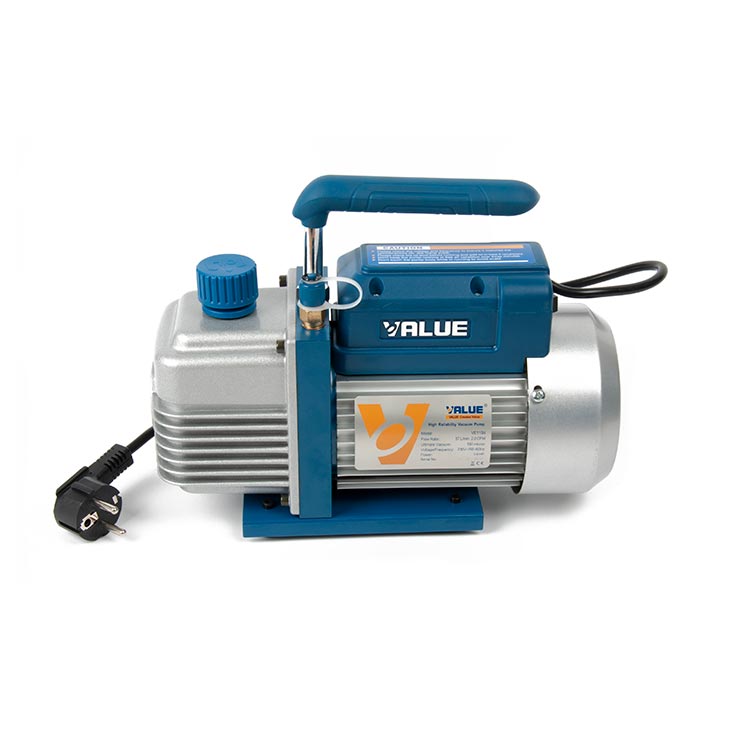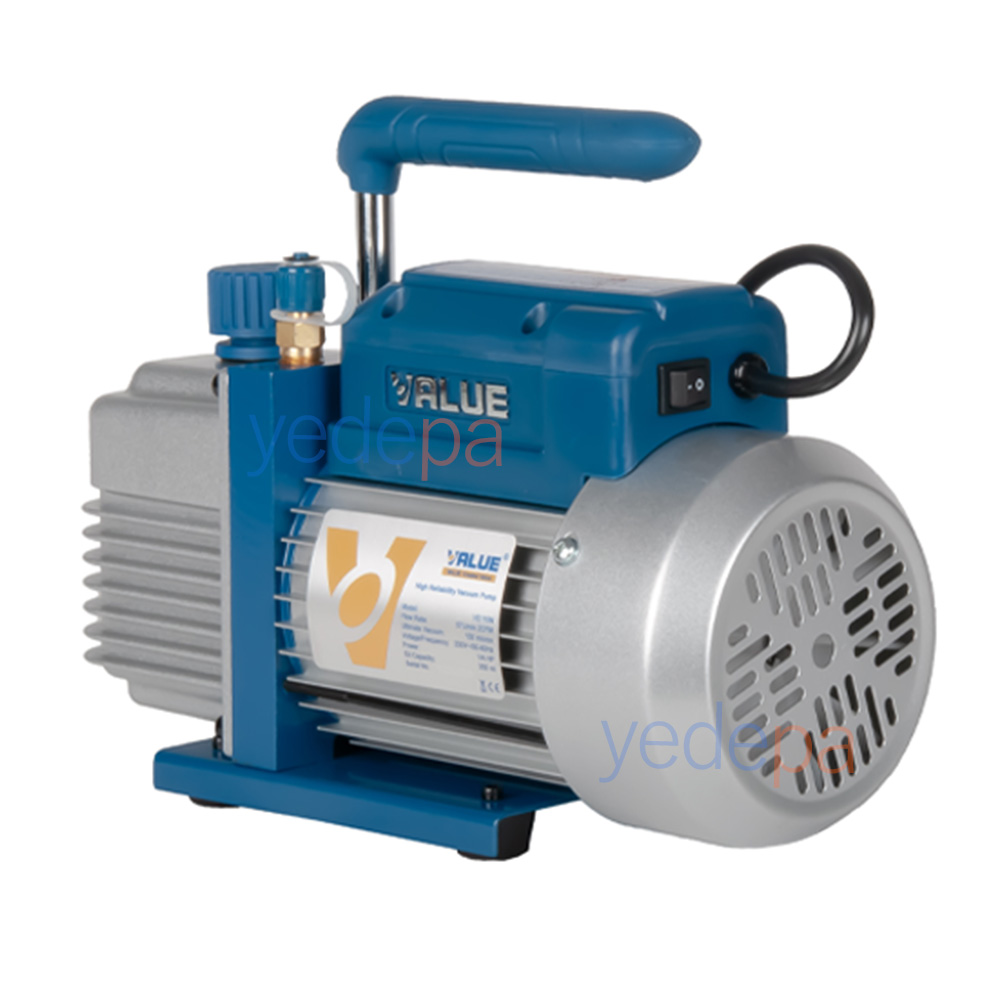
What Are Vacuum Pumps? Their Indispensable Role in the HVAC Sector
Vacuum pumps are professional service tools used in the installation, maintenance and repair of air conditioning and refrigeration systems to evacuate air, moisture and non-condensable gases from the system. In the HVAC sector, evacuation is as critical a step as refrigerant charging for proper commissioning. Moisture and air molecules remaining in the system cause compressor failure, reduced cooling performance, capillary blockages and a serious shortening of equipment life.
At Yedepa.com we offer a wide portfolio of vacuum pumps for HVAC technicians, refrigeration technicians and air conditioning service companies. In this guide, where we bring together the leading models from Rothenberger, Value and OEM brands under one roof, we cover in detail how to choose the right pump, which capacity suits which job, and maintenance recommendations for many years of efficient use.
Working Principle and Technical Details of Vacuum Pumps
Vacuum pumps evacuate gas molecules from an enclosed volume by means of mechanically moving vanes. Connected to the refrigeration circuit, the pump lowers the system pressure down to the micron level and discharges the moisture, air and non-condensable gases in the circuit. In an ideal evacuation, the system pressure should be pulled below 500 microns (approx. 0.5 mbar) and held at this level for a certain time for a leak test.
Modern vacuum pumps have two basic mechanical designs:
- Single-stage vacuum pumps: Work with a single rotor and a single set of vanes. They usually reach an ultimate vacuum of between 25-75 microns. Ideal for split air conditioner installations and small-capacity systems.
- Two-stage vacuum pumps: Two rotor sets work in series; the first stage produces the rough vacuum while the second stage produces the ultimate vacuum. Able to go below 15 microns, these pumps are essential for VRF, multi-split, cold room and industrial applications.
Pump capacity is expressed in l/min (liters/minute) or CFM (cubic feet per minute). 1 CFM is approximately equal to 28.3 l/min. As the system volume grows, a pump with a higher flow rate is needed.
Types and Models of Vacuum Pumps
Vacuum pumps used in the HVAC sector differ according to capacity and number of stages. The models in the Yedepa.com catalog are diversified to meet every need, from small service jobs to large industrial applications.
Vacuum Pumps by Capacity
| Capacity | Recommended Use | Example System |
|---|---|---|
| 2-3 CFM (50-90 l/min) | Single split air conditioner installation | 9,000 - 18,000 BTU wall-mounted |
| 4-6 CFM (110-170 l/min) | Multi-split, commercial air conditioning | 24,000 - 36,000 BTU systems |
| 8-9 CFM (220-255 l/min) | VRF, cassette, small cold room | VRF outdoor unit, ducted type |
| 12 CFM (340 l/min) | Industrial refrigeration, large VRF | Cold room, chiller, supermarket display |
Which Vacuum Pump Model Should You Choose? Decision Guide
The right choice of vacuum pump depends on your workload, the size of the systems you work on and your budget. The decision guide we have prepared in light of feedback from our HVAC technicians is as follows:
- If you only install single split air conditioners: A single-stage pump with a capacity of 3-4 CFM is sufficient. The Value VE 160N Single-Stage Vacuum Pump is a quiet and durable model that stands out in this class.
- If you do mixed work (installation + service): A two-stage 4-6 CFM pump pays back your investment. The Value VE 225N or Value VE 245N Vacuum Pump are the most preferred models in this segment.
- If VRF, commercial air conditioning and cold room work predominate: Two-stage models of 8 CFM and above should be preferred. The VB180 HVAC-R Black Vacuum Pump 8 CFM is an option that strikes a balance between affordable price and high performance.
- For industrial and heavy use: A model of 9-12 CFM with a strong brand reputation is required. The Rothenberger ROAIRVAC R32 9.0 Two-Stage Vacuum Pump and the VB1200 HVAC-R Black Vacuum Pump 12 CFM are models with proven reliability in this segment.
Vacuum Pumps Available on Yedepa.com
The vacuum pump models we have selected especially for our HVAC technicians at Yedepa.com offer a balance of original quality and an affordable price. Featured models in our stock:
- Rothenberger ROAIRVAC R32 9.0 Two-Stage Vacuum Pump: Designed for professional use with 230V power, 255 l/min flow rate and 750W motor power. It is compatible with all modern refrigerants such as R32, R410A and R134a.
- Value VE2100N Vacuum Pump: With its high-capacity, two-stage design, it is the favorite for VRF and cold room work. It contains a long-life Taiwan-made motor.
- Value VE 280N Vacuum Pump: Offers ideal capacity for medium-to-large commercial air conditioning systems. It stands out with its quiet operating characteristics.
- Value VE 260N Vacuum Pump: A model preferred in multi-split and VRF systems, providing high vacuum quality.
- VB1200 HVAC-R Black Vacuum Pump 12 CFM: A high-flow solution for industrial applications. Thanks to its large oil reservoir, it can operate continuously for long periods.
- VB180 HVAC-R Black Vacuum Pump 8 CFM: At the top of the price/performance balance, ideal for VRF and cassette-type air conditioner installations.
- Value VE 245N Vacuum Pump: The best-selling model among air conditioning service companies; a strong option in the mid-segment.
- Value VE 160N Single-Stage Vacuum Pump: An economical and durable solution for single split air conditioner installations.
- Value VE 160N Vacuum Pump: A compact model that is easy to carry on site thanks to its light design.
- Value VE 225N Vacuum Pump: A balanced model offering a suitable flow rate for multi-split and small commercial air conditioning systems.
Professional Vacuum Pump Selection Criteria
The common view of technicians who have spent years in the HVAC sector is that a wrongly chosen vacuum pump is a loss of both time and money. The criteria to consider for the right choice are as follows:
- Ultimate Vacuum Value: For professional use, models that can reach an ultimate vacuum in the 15-50 micron range should be preferred. While single-stage pumps usually stay around 75 microns, two-stage models go down to 15 microns.
- Motor Power: For continuous use, a motor power of between 1/3 HP and 1 HP is ideal. Low-power pumps quickly overheat under heavy use and reach the end of their life.
- Oil Reservoir Capacity: Pumps with a large reservoir require fewer oil changes and make your work on site easier.
- Gas Ballast: In wet systems, the gas ballast feature allows the moisture mixed into the oil to be discharged. If you work in very humid climates, it is an essential feature.
- Refrigerant Compatibility: For new-generation low-GWP refrigerants such as R32 and R454B, models specifically marked "R32 compatible" by the manufacturer should be chosen. The Rothenberger ROAIRVAC R32 9.0 is one of the pioneering models in this respect.
- Weight and Portability: For technicians constantly on the move, models between 10-15 kg are ideal. Very heavy pumps make mobile service difficult.
- Noise Level: For residential applications, models below 60 dB are important for customer satisfaction.
Vacuum Pump Use and Maintenance Recommendations
After buying the right vacuum pump, it is essential to follow a maintenance routine so that your equipment lasts a long time. The golden rules compiled from the field by the Yedepa.com technician team:
Steps for Correct Use
- Connection checks: Connect the vacuum hose tightly to the pump's inlet port; a loose connection reduces vacuum quality.
- Oil level check: Check the oil level through the sight glass before each use. The oil should be clear and light yellow in color.
- Run the pump in a horizontal position: Sloping surfaces disrupt the lubrication system and accelerate wear.
- Use the gas ballast valve: The valve should be open when starting the evacuation and closed as you go down to the micron level.
- Evacuation time: A minimum of 30 minutes of evacuation is recommended for small systems and 1-2 hours for large systems.
Maintenance Schedule
- Oil change every 20-25 uses: When the pump oil becomes contaminated, the ultimate vacuum value deteriorates. If the color has darkened, change it immediately.
- Annual general maintenance: The air inlet filter, vanes and seals should be checked once a year.
- Storage conditions: When not in use, the pump should be stored away from humid environments with the inlet port kept closed.
- First use: Run in a new pump by operating it idle for at least 15 minutes.
Brand Comparison: Rothenberger, Value and OEM
The three main brands in the Yedepa.com catalog appeal to different user profiles:
- Rothenberger: A professional brand in the premium segment, manufactured with the discipline of German engineering. Ideal for industrial use, VRF service and intensive field work. With the ROAIRVAC R32 9.0 model, it is a pioneer for R32 and modern refrigerants.
- Value: One of the most widely used vacuum pump brands in the HVAC sector worldwide. Although it is a Chinese manufacturer, its quality control standards are high and its price/performance ratio is excellent. The VE series is the series most preferred by air conditioning technicians in Turkey.
- OEM (VB Series): Affordable, durable and easy-to-service models. The VB180 and VB1200 models are ideal starter pumps, especially for service companies that are just starting out or expanding their fleet.
Vacuum Pump Accessories and Complementary Products
To use a vacuum pump efficiently, there are also accessories you need to have with it:
- Vacuum hose: A quality hose with 1/4" SAE connections, at least 1.5 meters long.
- Micron gauge (vacuum gauge): An electronic micron gauge is essential in professional use to measure vacuum quality.
- Manifold set: 2-valve or 4-valve manifold gauge sets are standard for refrigerant charging and evacuation.
- Vacuum pump oil: Special pump oil of the viscosity recommended by the manufacturer should be used.
At Yedepa.com, in addition to vacuum pumps, we also offer all these complementary service tools from our wide stock range.
Frequently Asked Questions (FAQ)
What is the difference between a single-stage and a two-stage vacuum pump?
While single-stage pumps usually reach an ultimate vacuum of 25-75 microns, two-stage pumps go below 15 microns. For professional HVAC service, two-stage models (e.g. Value VE 245N or Rothenberger ROAIRVAC R32 9.0) are essential.
Which refrigerants is a vacuum pump compatible with?
Modern vacuum pumps are compatible with all refrigerants, including R22, R134a, R404A, R407C, R410A and R32. However, for R32, specially certified models (such as the ROAIRVAC R32 9.0) should be preferred.
How often should the vacuum pump oil be changed?
An oil change is recommended every 20-25 evacuations under heavy use and every 3 months under light use. If the oil has darkened or looks cloudy, change it immediately.
What capacity vacuum pump should I buy?
If you only work on single split air conditioners, 3-4 CFM is sufficient. 6-9 CFM is recommended for VRF and commercial systems, and models of 12 CFM and above for industrial applications.
What is the difference between the Value VE 160N single-stage and two-stage versions?
The Value VE 160N Single-Stage model is designed for economical single split installations, while the two-stage VE 160N model is designed for multi-split and jobs requiring a deeper vacuum. The two-stage version goes down to a lower micron value.
How long does a vacuum pump last?
A quality vacuum pump that is maintained regularly can provide 10-15 years of trouble-free service. When used correctly, Rothenberger and Value brands exceed this period.
Is there a warranty for the pump I buy from Yedepa.com?
All our vacuum pumps come with the original manufacturer's warranty. For your questions, Yedepa.com customer service provides you with professional support.
Conclusion and Yedepa Advantages
For the HVAC technician, a vacuum pump is not just a tool; it is a direct indicator of work quality and customer satisfaction. It is inevitable that an air conditioning system that has not been properly evacuated will fail within 1-2 years. Therefore, choosing the "right" rather than the "cheap" equipment pays off in the long run.
At Yedepa.com, in the HVAC + Household Appliances + Air Conditioner spare parts sector, we offer our technicians the following advantages:
- Wide stock: All the leading vacuum pump models from Rothenberger, Value and OEM brands under one roof.
- Expert technical support: Our team, which comes from within the sector, helps you choose the right product.
- Original product warranty: All our products come with the manufacturer's warranty.
- Professional B2B support: Special pricing and invoicing solutions for service companies.
- Complete spare parts: When you buy a vacuum pump, complementary parts such as spare oil, hoses and seals are also available at Yedepa.com.
To renew your service equipment, expand your fleet or buy your first professional vacuum pump, you can browse the Yedepa.com catalog and choose the model best suited to you with the expertise of our technicians. The right equipment means the right job, and the right job means a happy customer.
🛒 Vacuum Pumps on Yedepa.com — Featured Products
The most popular professional products, selected from our stock. Check them out and order now.