💱 Price Note: The prices given on this page are USD-based reference values. For the current TRY equivalent and stock status, we recommend visiting the product page. On Yedepa.com, prices are calculated using the daily exchange rate.
What Are Air Conditioner Sensors? The Nerve Endings of the System
Air conditioner sensors are precision electronic components that work like the nerve endings of modern split, floor-standing, cassette-type and VRF/VRV systems, converting temperature changes into changes in electrical resistance. Without these small probes, which measure the room air of the indoor unit, the surface temperature of the evaporator pipe and sometimes the outdoor unit condenser line, the board (PCB) cannot properly control the compressor, the fan or the four-way valve. When an air conditioner comes in as "not cooling", "icing up", "stopping the outdoor unit in heating mode" or "showing error code H1, E2, F1, F2 on the display", in most cases the cause is a faulty NTC thermistor.
The sensor collection on Yedepa.com covers solutions manufactured to OEM quality standards that are directly compatible with the indoor units of Gree, Vestel, Arçelik, Beko, Samsung, LG, Mitsubishi, Daikin, Midea, Hisense, Airfel and many other brands. In this guide, we explain step by step for HVAC technicians, refrigeration technicians and service owners which sensor suits which function, which K value and which tip type.
Technical Details and Working Principle
Almost all air conditioner sensors work on the NTC (Negative Temperature Coefficient) thermistor principle. As the temperature rises, the resistance value falls; as the temperature falls, the resistance value rises. The manufacturer defines a specific reference curve in the board firmware (for example 5 kΩ @ 25°C, 10 kΩ @ 25°C, 15 kΩ or 20 kΩ @ 25°C) and calculates the actual temperature by comparing the resistance measured from the sensor with this curve. Therefore, if a sensor's K value (its nominal resistance in kΩ) is chosen incorrectly, the air conditioner will misread by 5°C to 15°C even though the sensor is physically fitted, and it will either not run at all or keep cutting out.
Air conditioners generally have two main sensor locations:
- Room sensor: Located behind the air intake grille of the indoor unit, it measures the target room temperature. The set-point comparison is made here.
- Pipe (Coil) sensor: Fitted to the evaporator copper pipe with a clip or seated in its pocket; it provides critical data for defrost initiation, freeze protection and hot gas management.
Some models have a third sensor: the outdoor unit condenser sensor. In inverter air conditioners, the mathematical average of these three measurements is taken to smooth the compressor frequency. As a result, a single faulty probe can cause the unit to shut down completely.
Types and Models
Although sensors look very similar from the outside, they differ significantly in tip material, K value, cable length, connector type and number of probes. The main types in the Yedepa.com catalog:
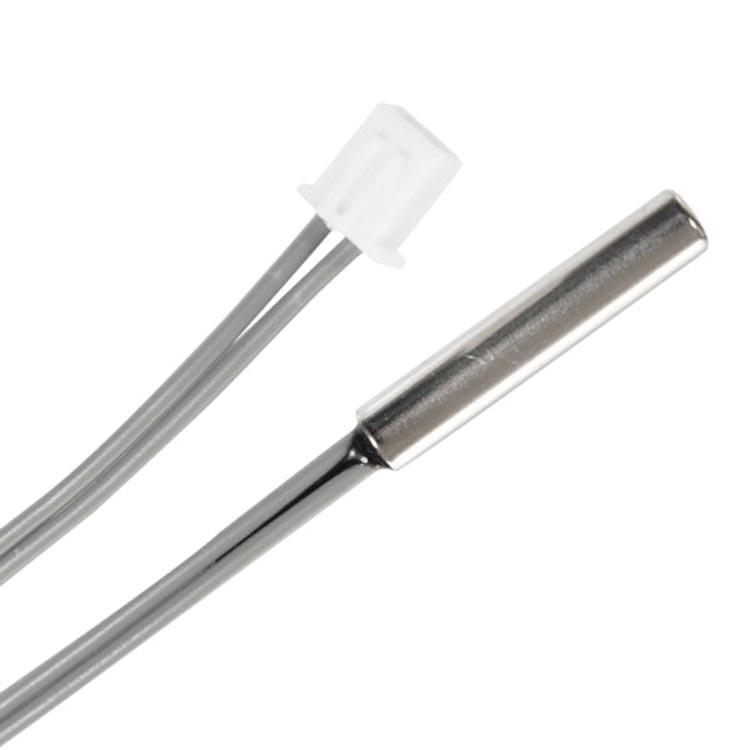
- Copper-tip room sensors: Fast response time, high thermal conductivity. Preferred for both the room and pipe zones. 5 kΩ, 10 kΩ and 50 kΩ variants are available in our stock.
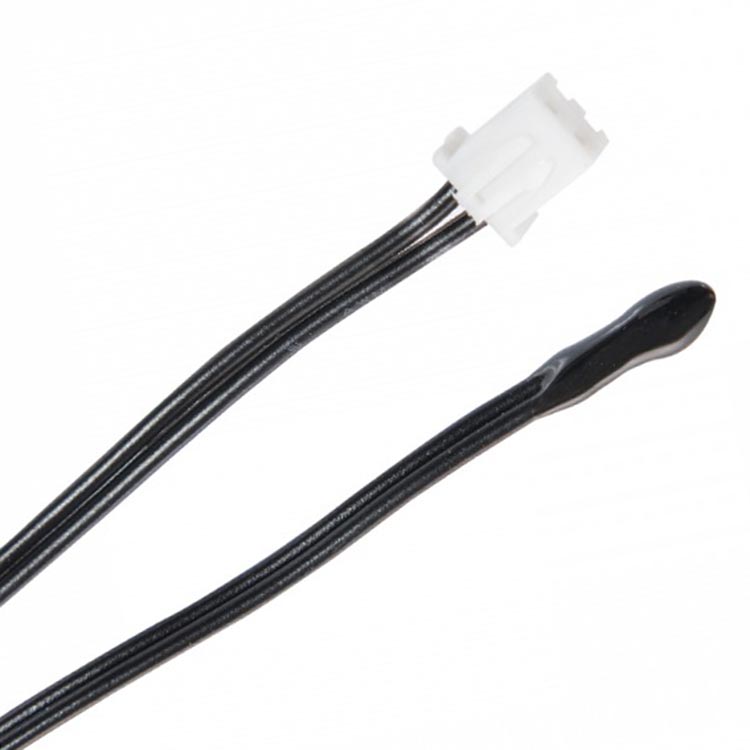
- Plastic-tip room sensors: Lower cost, full resistance to corrosion, very common on the room grille of floor-standing and cassette units. Listed as 5 kΩ and 10 kΩ.
- Dual-probe (combo) sensors: Sets with a manufacturer-specific wiring harness that measure both room and pipe temperature through a single connector. Gree, Midea and many brands using OEM boards use this type.
- Hot-cold sets: Economical twin packs prepared for technicians who want to replace both probes together during service.
Cable length is also decisive in practice. 50 cm may not be enough on floor-standing and ducted air conditioners; therefore, alongside standard lengths such as 47 cm, we recommend that you confirm custom length requests via the Yedepa.com customer line.
Which Model Should You Choose? Decision Guide
Choosing the right sensor depends on the answers to three questions:
- What is the K value? Measure the sensor from the old board at room temperature (25°C) with a multimeter. Choose the reference value it is closest to: 5 kΩ, 10 kΩ, 15 kΩ, 20 kΩ or 50 kΩ.
- What is the tip material? If it will be pressed against the pipe surface, choose copper-tip; if it will measure bare in the air flow, choose plastic-tip.
- Does the board need a single probe or a dual probe? If the connector has 2 pins, you need a single probe; if it has 4 pins, you need a dual-probe set.
The comparison table below is a quick reference for the needs most often encountered in the field:
| Sensor Type | K Value | Typical Use | Recommended Location |
|---|---|---|---|
| Copper-Tip NTC | 5 kΩ | Pipe / evaporator | Clip on copper pipe |
| Copper-Tip NTC | 10 kΩ | Room and pipe | Universal |
| Copper-Tip NTC | 50 kΩ | Older split models | Pipe line |
| Plastic-Tip NTC | 5 kΩ | Room grille | Indoor unit air intake |
| Plastic-Tip NTC | 10 kΩ | Floor-standing / cassette type | Room measurement |
| Dual-Probe Combo | 15K + 20K | Gree and OEM boards | Room + pipe together |
Sensors You Can Find on Yedepa.com
Below are the main OEM air conditioner sensor models in our stock and our service prices. All products are tested, quality-checked and stored ready for same-day preparation:
- Gree 47cm Dual-Probe Air Conditioner Sensor Room and Pipe Thermistor (15K + 20K): A professional solution with a 47 cm cable that matches the factory connector of Gree indoor units one-to-one. 2 USD.
- 15KW Air Conditioner Hot-Cold Thermistor Set (Room and Pipe Sensor Twin Set): An economical set offering room + pipe sensors together for commercial split and floor-standing air conditioners of 15 kW capacity. 1 USD.
- Air Conditioner Copper-Tip Room Sensor NTC - 5 kΩ: Fast-response copper probe for older series boards using a 5 kΩ reference. 1 USD.
- Air Conditioner Copper-Tip Room Sensor NTC - 50 kΩ: High-resistance sensor that clears error codes on inverter models looking for a 50 kΩ reference. 1 USD.
- Air Conditioner Plastic-Tip Room Sensor NTC - 10 kΩ: The most commonly used standard on the air intake grilles of floor-standing and cassette units. 1 USD.
- Air Conditioner Plastic-Tip Room Sensor NTC - 5 kΩ: Economical solution for older split air conditioners with low-K-value board firmware. 1 USD.
- Air Conditioner Copper-Tip Room Sensor NTC - 10 kΩ: Universal use on models built on 10 kΩ, the most common K value. 1 USD.
All our sensors are manufactured to OEM standards and have passed one-to-one compatibility testing with original Gree, Midea, Vestel, Beko and Arçelik board firmware.
Professional Selection Criteria
As an HVAC technician or refrigeration technician, not only price but also field reliability should be decisive when sourcing sensors. At Yedepa.com, we recommend the following criteria to our technicians:
- Resistance tolerance: The tolerance of a quality NTC sensor should be between 1% and 3%. Cheap sensors produced with wider tolerances cause a 2-3°C deviation, and the customer comes back with a "not cooling" complaint.
- B value (Beta constant): B values such as 3435 K, 3470 K and 3950 K determine the slope of the sensor's resistance-temperature curve. Choosing a sensor that matches the B value stated in the manufacturer's documentation ensures that defrost and freeze protection are triggered correctly.
- Cable insulation: PVC or silicone insulation that withstands temperatures rising to 60°C in the indoor unit and above 90°C on the condenser line is required. Silicone sheathing is preferred on Yedepa.com sensors.
- Connector lock: If the connector comes loose under vibration, the board reads the sensor as an "open circuit" and gives E2, F1, F2 error codes. Using a latching (locking) connector reduces the risk of problems after service.
- Brand compatibility list: Asking which brands and models the sensor has been tested with prevents the "I tried to fit it and it didn't fit" scenario.
Usage and Maintenance Recommendations
Although sensor replacement looks mechanically simple, our field experience shows that small mistakes can turn into costly warranty cases. Here are the key points to watch out for during service:
- Cut the power: Always switch off the circuit breaker before replacing the sensor. Working on a live board endangers both the user and the sensitive microcontroller.
- Measure the old sensor: Before removing it, measure the probe with a multimeter and verify the K value. Fitting parts by guesswork makes your customer pay a second service fee.
- Thermal paste in the copper probe pocket: Applying a thin layer of thermal paste to the tip of the pipe sensor speeds up heat transfer by 15-20% and prevents defrost delays.
- Route the cable away from the compressor and the fan motor: When the NTC cable runs parallel to conductors carrying high current, electromagnetic noise causes incorrect readings.
- Board reset: After replacing the sensor, always cut the power completely for 1-2 minutes and reset the board. On some inverter models, the EEPROM caches the old sensor data.
- Check measurement: After the new sensor is fitted and the unit has run for 10 minutes, read temperature values such as "T1, T2, T3" from the control panel. If it reads room temperature within 1-2°C, the system is healthy.
Frequently Asked Questions (FAQ)
How do I know if the sensor is faulty?
Error codes E1, E2, F1, F2 or H1 on the indoor unit display, the unit running for 2 minutes and then stopping, constant icing or never entering defrost are classic symptoms of sensor failure. If the probe reads 20% above or below the nominal value with a multimeter at 25°C ambient, it needs to be replaced.
One sensor has failed; should I replace both?
Usually yes. The room and pipe sensors were manufactured at the same time; if one has failed, the other has also started to drift. That is why on Yedepa.com we offer twin thermistor kit sets.
Can I fit a 10 kΩ sensor instead of a 5 kΩ one?
No. The K value must match the board's firmware table. Choosing the wrong K value causes the unit to read completely wrong and the compressor either not to run at all or to run continuously and overheat.
Does fitting an OEM sensor to my Gree air conditioner affect the warranty?
Yedepa.com OEM sensors are manufactured according to the original technical drawings and can be used safely on appliances that are still under warranty. On appliances that are out of official service coverage, replacing parts outside the main authorized service is permitted anyway.
How many years does an air conditioner sensor last?
A quality NTC thermistor works for 8-10 years under normal conditions. However, a humid environment, voltage fluctuations and lightning surges can reduce its life to 3-5 years.
Can I shorten the dual-probe cable?
Yes, but the joint must be soldered and insulated with heat-shrink tubing. Joints made with crimp ferrules loosen with vibration and lead to error codes.
Conclusion and Yedepa Advantages
Although it is a small component, the air conditioner sensor is a critical part responsible for the correct operation of the entire refrigeration cycle. By choosing the right K value, a suitable tip material and quality insulation, you can raise both customer satisfaction and your service reputation. Yedepa.com offers OEM-quality sensors to HVAC technicians and service owners at economical prices, with wide stock and technical support.
Our advantages:
- OEM quality guarantee: All sensors are manufactured in accordance with the original technical drawings.
- Wide range of K values: 5 kΩ, 10 kΩ, 15 kΩ, 20 kΩ and 50 kΩ values under one roof.
- Technician-friendly pricing: Prices start from 1 USD for a single sensor and from 1 USD for a twin set.
- Technical support line: You can ask the Yedepa.com customer team your brand-model compatibility questions.
- B2B structure focused on technicians + service companies: Special price advantage for service companies on bulk purchases.
- Stock assurance: Continuously updated stock for fast supply when an immediate need arises in the field.
When you are undecided in diagnosing a sensor failure or unsure about a K value, you can use the technical descriptions in the Yedepa.com catalog and, if necessary, our technicians can get additional advice from our customer line. Extend the life of both your appliance and your service reputation with the right sensor choice, the right diagnosis and a quality product.
🛒 Air Conditioner Sensors on Yedepa.com — Featured Products
Selected professional products from our stock that are preferred most. Review and order now.